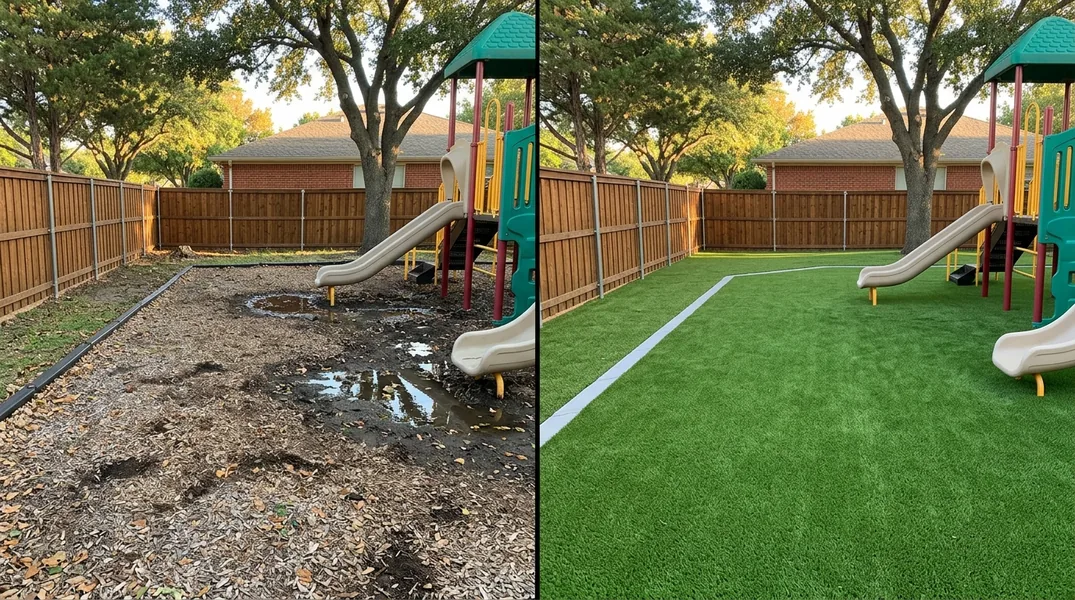
Understanding Your Shady Yard Challenge in Plano
If you own a home in Plano, you know how brutal the Texas sun can be. But here's the irony: many homeowners struggle with the opposite problem. Large trees, tall fences, and neighboring structures cast shadows that make traditional lawn care nearly impossible. Shady yards present a unique landscaping puzzle, and the solution you choose will depend on your lifestyle, budget, and long-term maintenance preferences.
When shade covers 40 percent or more of your yard, standard turf grass begins to struggle. The grass weakens, thins out, and becomes susceptible to disease and moss growth. This is when homeowners in Plano typically face three main options: stick with real grass and invest heavily in maintenance, switch to shade-tolerant varieties like St. Augustine, or explore drought-tolerant landscaping with native plants. Each approach has real merit, and the best choice depends on your specific situation.
Artificial Turf vs Real Grass: The Modern Comparison
Residential Artificial Grass Installation has evolved dramatically over the past decade. Modern synthetic turf looks and feels remarkably authentic, and it thrives in shade where natural grass fails. The key advantage is performance: artificial grass doesn't need sunlight to stay green, healthy, and attractive year-round. It won't develop bare patches, brown spots, or disease in shaded areas. For homeowners tired of watching their lawn deteriorate despite constant effort, this is genuinely liberating.
The artificial grass vs real grass debate ultimately comes down to upfront cost versus long-term maintenance. Real grass is cheaper to install initially, but shaded areas demand ongoing treatments, overseeding, fungicide applications, and frequent mowing. Artificial turf requires a higher initial investment but eliminates mowing, fertilizing, pesticide applications, and seasonal reseeding. Over 10 to 15 years, many homeowners find that artificial turf saves both time and money. Plus, modern synthetic options are fully recyclable and made from eco-friendly materials, so the environmental argument has shifted considerably. If you're considering this option, getting a free estimate from Plano Turf Installation will give you a clear picture of what the investment looks like for your specific yard.
St. Augustine Grass: The Traditional Shade Solution
St. Augustine grass has been the go-to shade-tolerant option for Texas homeowners for generations. This warm-season grass variety handles partial shade better than most alternatives and establishes quickly. If your yard receives 3 to 4 hours of indirect sunlight daily, St. Augustine can perform reasonably well. It's also softer underfoot than many other grass types, making it comfortable for barefoot walking and outdoor play.
However, St. Augustine comes with real limitations in heavily shaded yards. In deep shade (less than 3 hours of sun), it will thin out, develop bare patches, and become vulnerable to fungal diseases like take-all root rot and gray leaf spot. Maintenance is still substantial: you'll need regular watering during dry spells, fertilization in spring and fall, and fungicide treatments if disease appears. St. Augustine also spreads via rhizomes and can become invasive in garden beds, requiring regular edging and management. For Plano homeowners with moderate shade and a tolerance for ongoing lawn care, St. Augustine remains a viable option. But if shade is severe or you value your free time, it may not be the best fit.
Xeriscaping and Native Plants: A Sustainable Alternative
Drought-tolerant landscaping and xeriscaping represent a fundamentally different approach to yard design. Rather than fighting shade with grass, this method embraces it by incorporating native Texas plants, groundcovers, mulch, and hardscaping elements. Native shade-loving plants like Texas privet, fragrant sumac, agarito, and inland sea oats thrive in low-light conditions and require minimal water once established. This approach aligns beautifully with environmental conservation and can create a visually striking, layered landscape that feels natural and mature.
The beauty of xeriscaping is that it eliminates the grass-or-bust mentality entirely. You create texture, depth, and seasonal interest through varied plantings rather than relying on a monoculture lawn. Maintenance shifts from mowing and fertilizing to occasional pruning, weeding, and mulch refreshment. Over time, a well-designed native plant landscape often requires less overall effort than maintaining struggling grass in shade. However, there's a design phase upfront. You need to plan plant placement, spacing, and hardscape elements carefully. Initial installation can be labor-intensive, though the long-term payoff in reduced maintenance and environmental benefit is substantial. This approach works especially well for homeowners who view landscaping as an opportunity to support local pollinators and wildlife.
Cost Comparison: What You'll Actually Spend
When comparing these three options, cost extends beyond installation. Real grass in a shaded yard typically costs $0.50 to $1.50 per square foot to install, but annual maintenance runs $500 to $1,500 depending on yard size and the severity of shade-related problems. Disease treatments, overseeding, and extra fertilizer add up quickly. Over a 10-year period, a 2,000-square-foot shaded lawn could easily cost $7,000 to $10,000 in maintenance alone.
Residential Artificial Grass Installation typically costs $2.50 to $6.00 per square foot installed, meaning a 2,000-square-foot yard runs $5,000 to $12,000 upfront. That's a significant initial expense, but ongoing maintenance is nearly zero. You'll rinse the turf occasionally and brush it to maintain the pile, but no mowing, fertilizing, or disease management. Over 10 years, total cost often comes out lower than real grass in a shaded setting. For specific pricing tailored to your Plano property, contact Plano Turf Installation at (469) 874-1078.
Native plant landscaping and xeriscaping typically cost $1.50 to $3.00 per square foot for initial design and installation, depending on plant selection and hardscape complexity. Annual maintenance is minimal once plants are established, usually under $200 to $300 annually. This makes it the most cost-effective long-term option for many homeowners, though the upfront investment and design phase require more thought than simply installing grass or turf.
Making Your Decision: Which Option Fits Your Lifestyle
The right choice depends on three factors: how much shade you have, how much time you want to spend on yard maintenance, and what aesthetic appeals to you. If you have moderate shade (3 to 5 hours of sun) and enjoy lawn care, St. Augustine is a proven, affordable option. If you have deep shade and want a green, manicured appearance with zero maintenance, artificial turf is worth the investment. If you're drawn to sustainability, prefer a naturalistic landscape, and don't mind a design phase, native plants and xeriscaping offer unmatched long-term value.
Many homeowners in Plano find that a hybrid approach works best. You might install Residential Artificial Grass Installation in heavily shaded areas while keeping real grass or native plantings in sunnier zones. This balances aesthetics, function, and budget. Whatever direction you choose, the key is matching your solution to your actual yard conditions and lifestyle, not just following what neighbors have done.
If you're leaning toward artificial turf for your shaded areas, Plano Turf Installation specializes in custom installations that look and perform beautifully. Call (469) 874-1078 today to discuss your yard and get a free estimate. Our team will help you understand exactly what's possible for your specific property and shade situation.
Looking for a professional artificial grass installation company in Plano? Plano Turf Installation responds fast for all your artificial grass installation needs.
Get a Free Quote