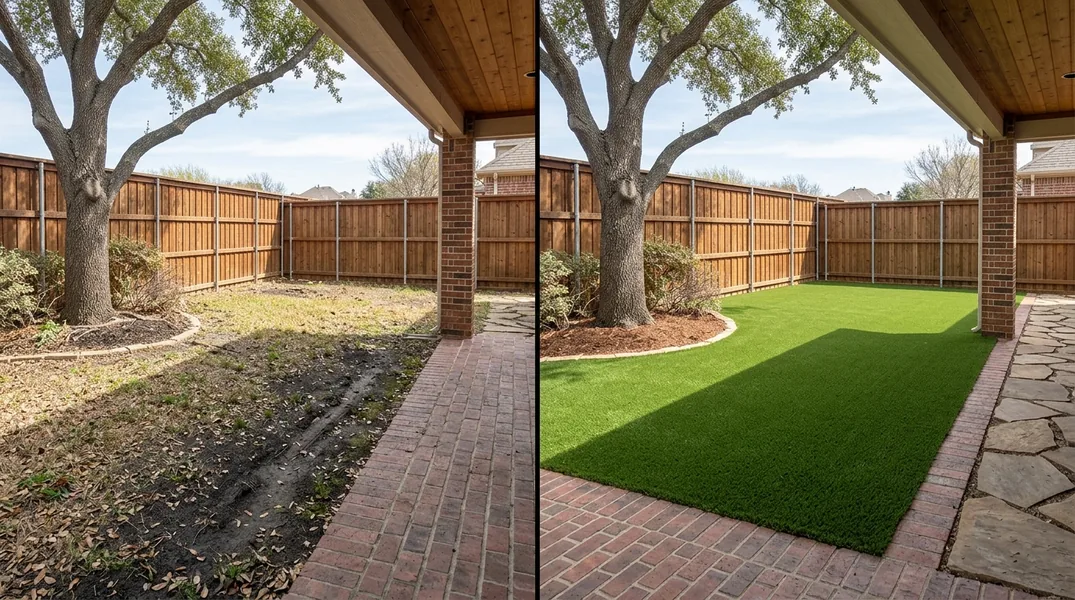
Why Plano's Blackland Clay Demands Special Drainage Planning
Plano sits in the heart of North Texas blackland prairie, where the native soil composition presents a unique challenge for artificial grass installation. Blackland clay is dense, heavy, and naturally retains water. This characteristic, while excellent for native prairie vegetation, becomes problematic when you're installing synthetic turf over it. Without proper planning, water accumulates beneath your artificial grass, leading to mold, odor, compaction, and premature degradation of your new lawn.
Homeowners in Plano often discover this the hard way. They install artificial grass directly over clay or with minimal base preparation, only to find soggy patches, sinking areas, and an overall deterioration within a few years. The good news is that understanding your soil type and investing in proper Residential Artificial Grass Installation with professional base preparation eliminates these problems entirely. The key is drainage, and drainage starts long before the turf goes down.
Understanding What to Put Under Artificial Grass: Base Layers Explained
The foundation of any successful artificial grass installation rests on understanding what to put under artificial grass. This isn't simply about laying turf over dirt. A proper base system consists of multiple layers, each serving a specific purpose. The bottom layer addresses drainage and compaction, while upper layers provide stability, levelness, and additional water management. In Plano's clay-heavy environment, this layered approach is non-negotiable.
The first step involves removing or breaking up the existing blackland clay to a depth of 4 to 6 inches. This loosens the dense soil and improves permeability. Next comes a perforated landscape fabric or geotextile membrane, which prevents clay from mixing back into your drainage layer while allowing water to pass through. Above this, you'll add a coarse drainage material, typically 3 to 4 inches of crushed granite, recycled asphalt, or engineered stone dust. This layer is critical because it creates channels for water to flow away from your turf. Finally, a compacted base layer of finer material, usually crushed limestone or recycled asphalt millings, provides a stable, level surface for the artificial grass itself. Each layer has a purpose, and skipping any one of them compromises the entire system.
Artificial Grass Drainage Systems: Ensuring Water Moves Away, Not Into Your Yard
Artificial grass drainage isn't just about what happens directly under the turf. It's about creating a complete system that moves water away from your installation and your home's foundation. Poor drainage doesn't just affect the grass itself; it can contribute to foundation issues, basement moisture, and landscape erosion. A comprehensive artificial grass drainage solution includes slope management, edge drainage, and connection to your property's existing drainage infrastructure.
The surface of your artificial grass should have a slight slope, typically 1 to 2 percent grade, directing water toward a perimeter drainage system or existing swale. This might involve installing French drains along the edges of your turf area, which are trenches filled with gravel and perforated pipe that capture and redirect water. In some cases, we connect this system to your property's storm drain or daylight it safely away from structures. The subsurface drainage system we discussed earlier works in tandem with this surface management. Water that penetrates the turf passes through the base layers and flows toward drainage outlets. Without this dual approach, water simply pools and causes problems. Professional installers in Plano understand these principles and design installations accordingly.
Artificial Grass Underlay: Choosing the Right Material for Plano's Climate
The term artificial grass underlay refers to the materials placed directly beneath the synthetic turf. This is distinct from the broader base system, though the two work together. Your underlay material serves multiple functions: it provides cushioning, manages moisture, prevents weed growth, and protects the turf backing from direct contact with the base layer. In Plano's hot, humid summers and occasional freeze-thaw cycles, choosing the right underlay material makes a measurable difference in turf longevity and performance.
Common underlay options include closed-cell foam, open-cell foam, and rubber crumb underlayment. Closed-cell foam offers excellent cushioning and some drainage capability but can trap moisture in humid climates. Open-cell foam breathes better and drains more freely, making it a popular choice for North Texas installations. Rubber crumb underlayment provides superior drainage and is increasingly popular for residential applications, though it comes at a higher cost. For Pet Turf and Dog Run Installation, many homeowners prefer rubber underlayment because it provides better drainage for pet waste areas and offers superior durability under foot traffic. The best choice depends on your specific yard conditions, intended use, and budget. A professional assessment of your property ensures you get the right underlay for your situation.
Turf Base Prep: The Step Most Homeowners Underestimate
Turf base prep is where artificial grass installations succeed or fail. This foundational work happens before a single square foot of synthetic turf is laid down, and it's the step that separates professional installations from DIY disasters. Proper base preparation involves site assessment, soil testing, excavation, compaction, grading, and layer installation. Each step requires knowledge, equipment, and attention to detail. Many homeowners assume they can save money by skipping professional base prep, only to invest thousands more in repairs and replacement within a few years.
The process begins with a thorough site evaluation. We assess drainage patterns, identify low spots where water collects, check for underground utilities, and evaluate the existing soil structure. For clay-heavy yards, we may need to break up and remove portions of the existing soil. We then install the layered system described earlier, compacting each layer to the appropriate density. Improper compaction leads to settling and uneven surfaces. We grade the entire area to ensure proper water flow, install edge restraints, and prepare the surface for underlay and turf installation. This entire process typically takes several days for a residential yard. When you contact Plano Turf Installation at (469) 874-1078 for a free estimate, we'll walk you through exactly what your property needs.
Professional Installation Near Me: Why DIY Base Prep Often Fails
The temptation to DIY artificial grass installation is understandable, especially when you see online tutorials and rental equipment available at local hardware stores. However, base preparation is one area where professional expertise genuinely matters. Without proper equipment, experience, and knowledge of local soil conditions, DIY base prep frequently results in poor drainage, uneven surfaces, and premature turf failure. The cost of fixing a failed DIY installation often exceeds the cost of doing it right the first time.
Professional installers bring specialized equipment like plate compactors, laser levels, and drainage tools. They understand how to work with Plano's specific soil conditions and know which materials perform best in our climate. They can identify and solve drainage problems that homeowners might miss. They ensure proper slope, adequate compaction, and complete layer integration. When you invest in professional Residential Artificial Grass Installation, you're not just paying for materials and labor. You're paying for expertise, accountability, and a warranty that protects your investment. Plano Turf Installation stands behind every installation we complete, and that confidence comes from doing the work right from the ground up.
Looking for a professional artificial grass installation company in Plano? Plano Turf Installation responds fast for all your artificial grass installation needs.
Get a Free Quote